125 pages
Ten parts, forty-one chapters.
— Real households · real 72 hours —
Not the government. Not the neighbours. You. The person in the house who is supposed to know where the water is, whether the food in the freezer is still safe, how to keep a two-year-old warm in a house with no heating, and whether the family should stay or go. Nobody appoints you. It just happens. Here is what it looked like for six households who found out the hard way.
— Reader case study —
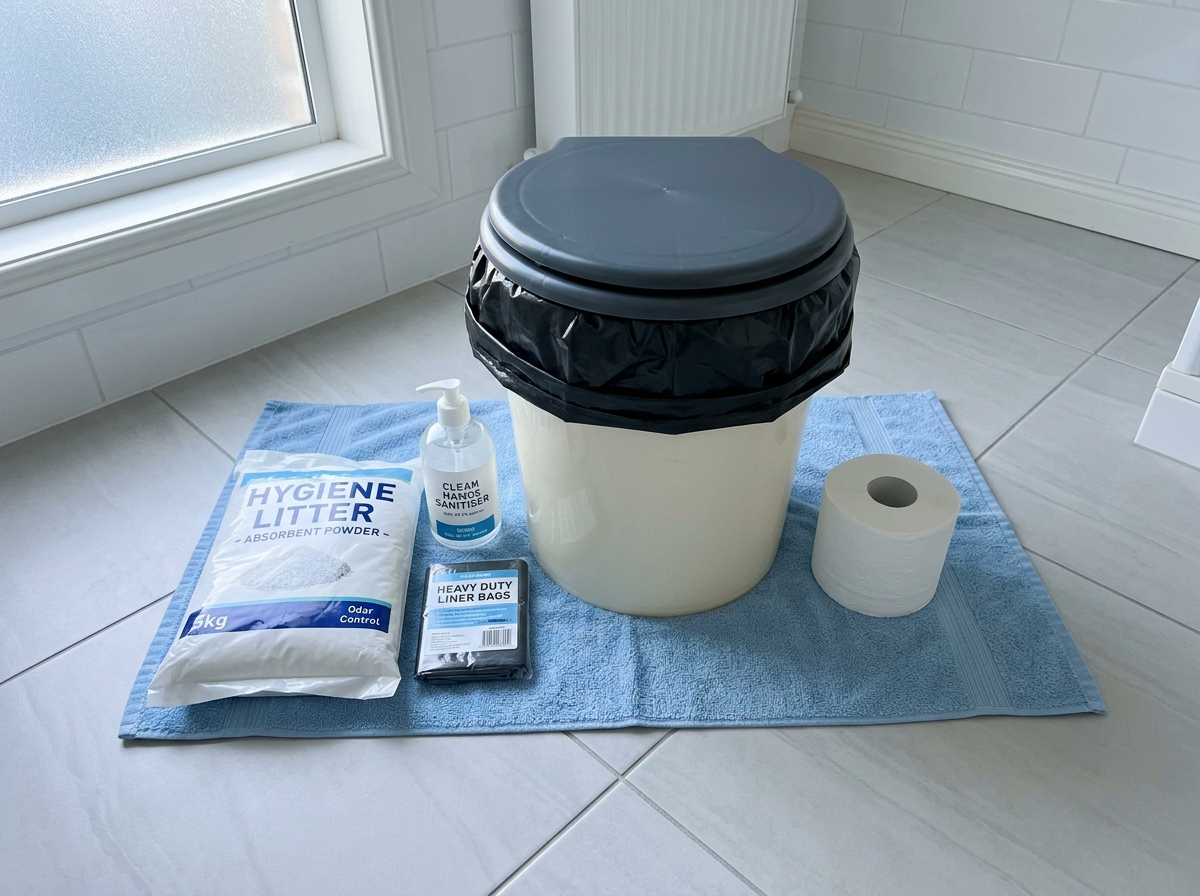
“We had no plan for the bathroom. That was the moment it felt real.”
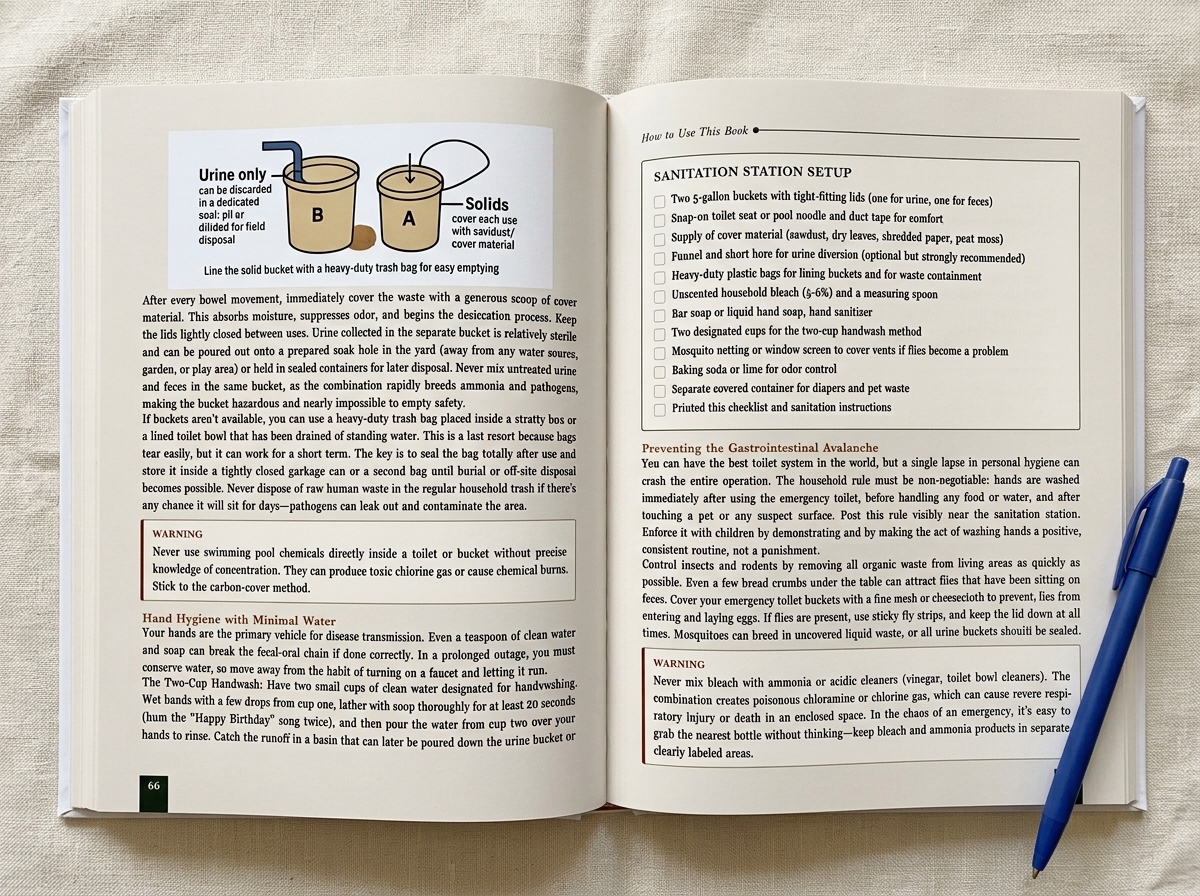
The water stopped on a Tuesday afternoon and our first thought was drinking water. By midnight, the thing everyone was quietly worrying about was the toilet. Chapter 22 gave us a clean, practical setup using a bucket, liners, absorbent material and a handwashing station. It took ten minutes to assemble and removed a huge amount of stress from the week.
Get the same guide Maya used — $9.99 →— The self-sufficient survival system —
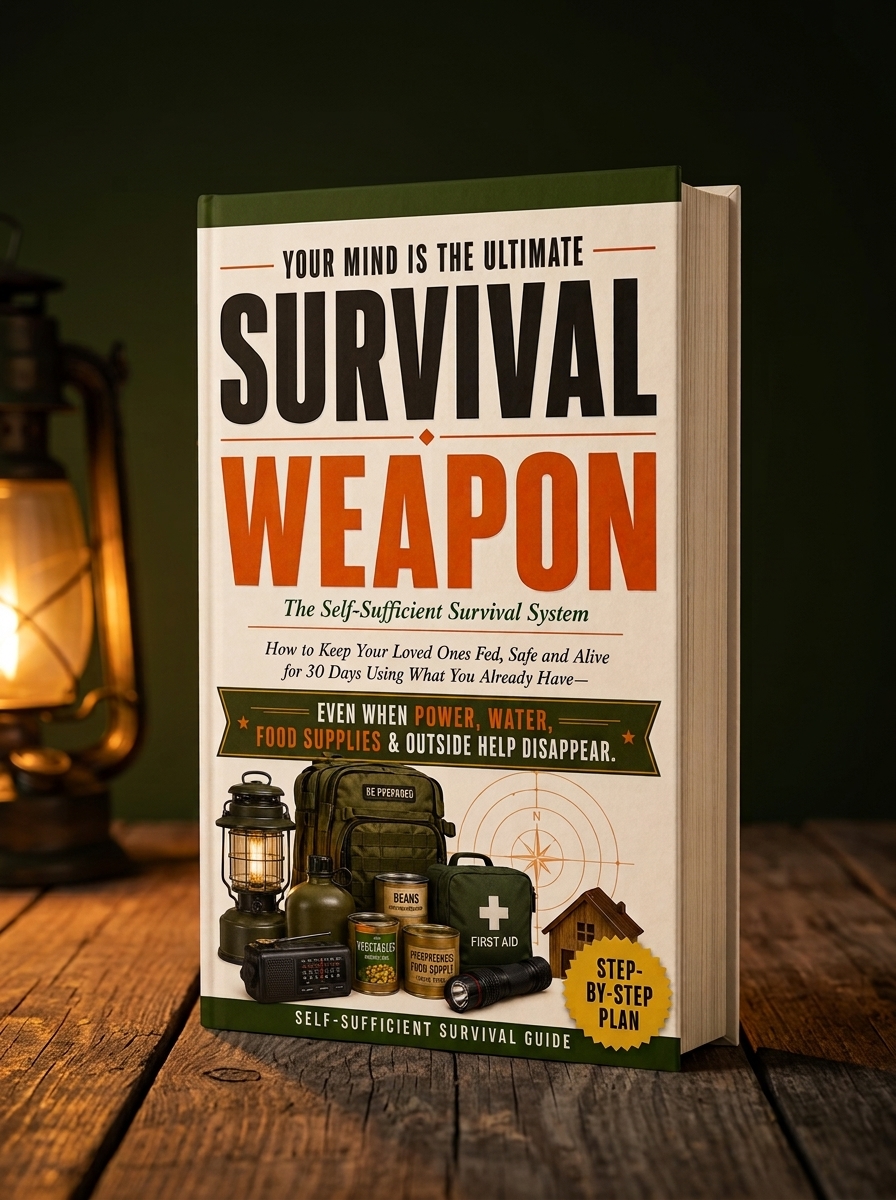
How to keep your loved ones fed, safe and alive for 30 days using what you already have — even when power, water, food supplies and outside help disappear.
Instant PDF · phone, tablet & computer · yours forever · 7-day guarantee
— Reader case study —
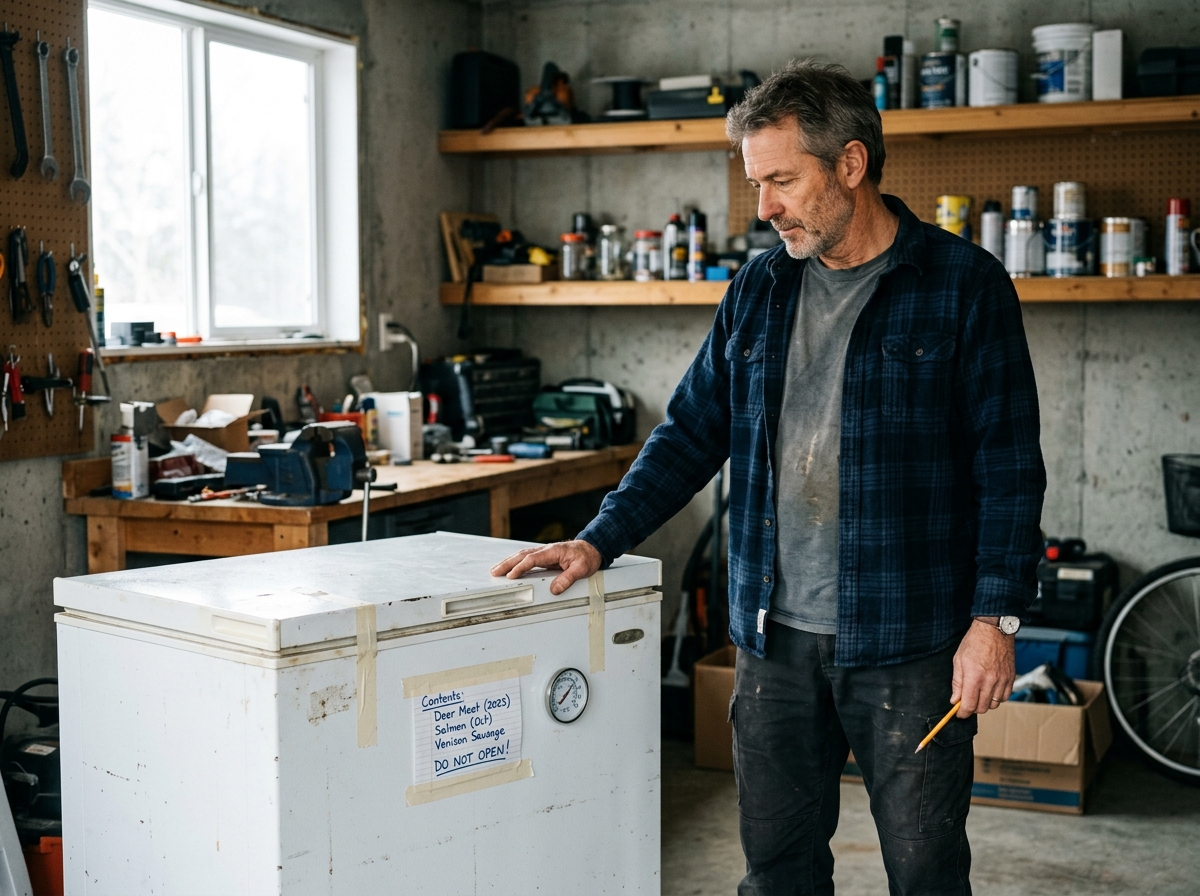
“The freezer was full. We still almost lost the food.”
When the power went out, we treated the freezer like a cupboard and opened it every hour. By the second day we were guessing what was safe. The food sequence in Chapter 12 gave us a simple order: protect the coldest items, stop opening the door, eat the right foods first, and discard anything that crossed the line. We saved most of the contents and stopped arguing about it.
Get the same guide David used — $9.99 →— Everything included —
Ten parts, forty-one chapters.
Calculators, checklists and plans.
Phone, tablet & computer.
Full refund, no questions.
“They do not need you to know everything. They need you to be ready.”
The survival gear industry sells fear, because fear is what makes people buy things they will never use. This book does the opposite. It starts with an inventory of what is already in your house — and for most families, that inventory turns out to cover the first week almost entirely.
— Reader case study —
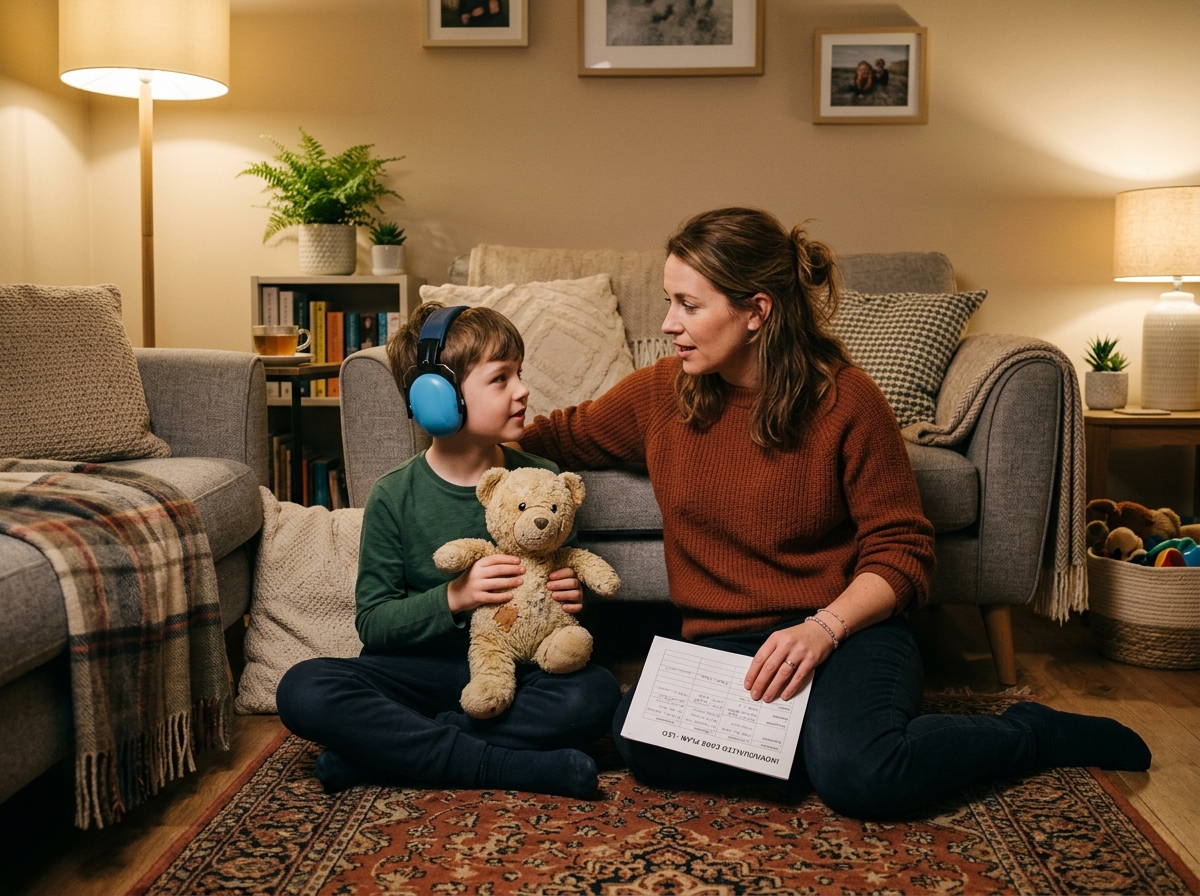
“The plan worked because it included our son.”
Our nine-year-old is autistic, and every generic checklist made him invisible. The family-care chapter told us to write down his routines, comfort objects, sensory triggers, medication details and the exact words that help him settle. During a long outage, that page was the difference between improvising and knowing what to do next.
Get the same guide Aisha used — $9.99 →— Four things to do this weekend —
No bunker, no bug-out bag, no $400 water filter. Four things you can do this weekend with what is already in your cupboards.
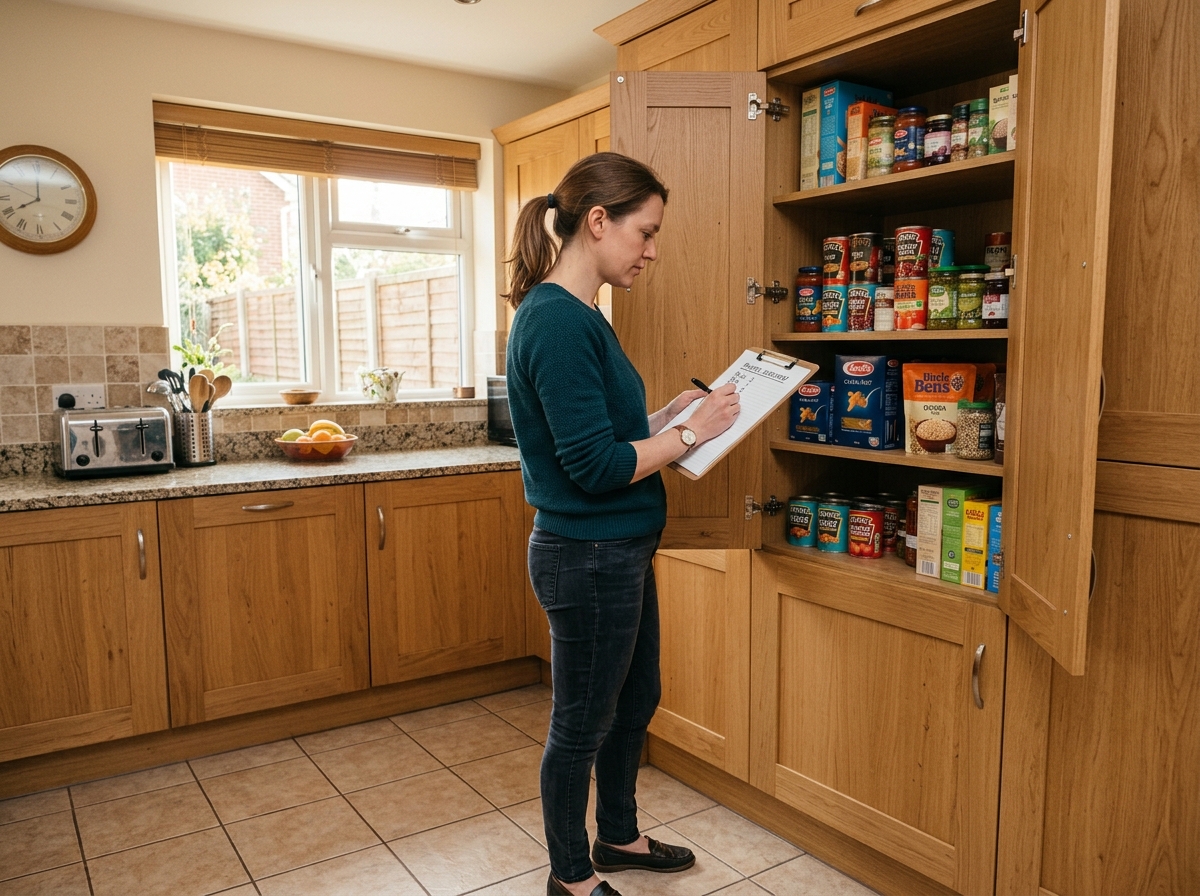
Walk the house with a pen and write down every source of water, every food that survives without refrigeration, every container, every light, every battery. Most families discover they already have four to seven days of supplies and had simply never counted them.
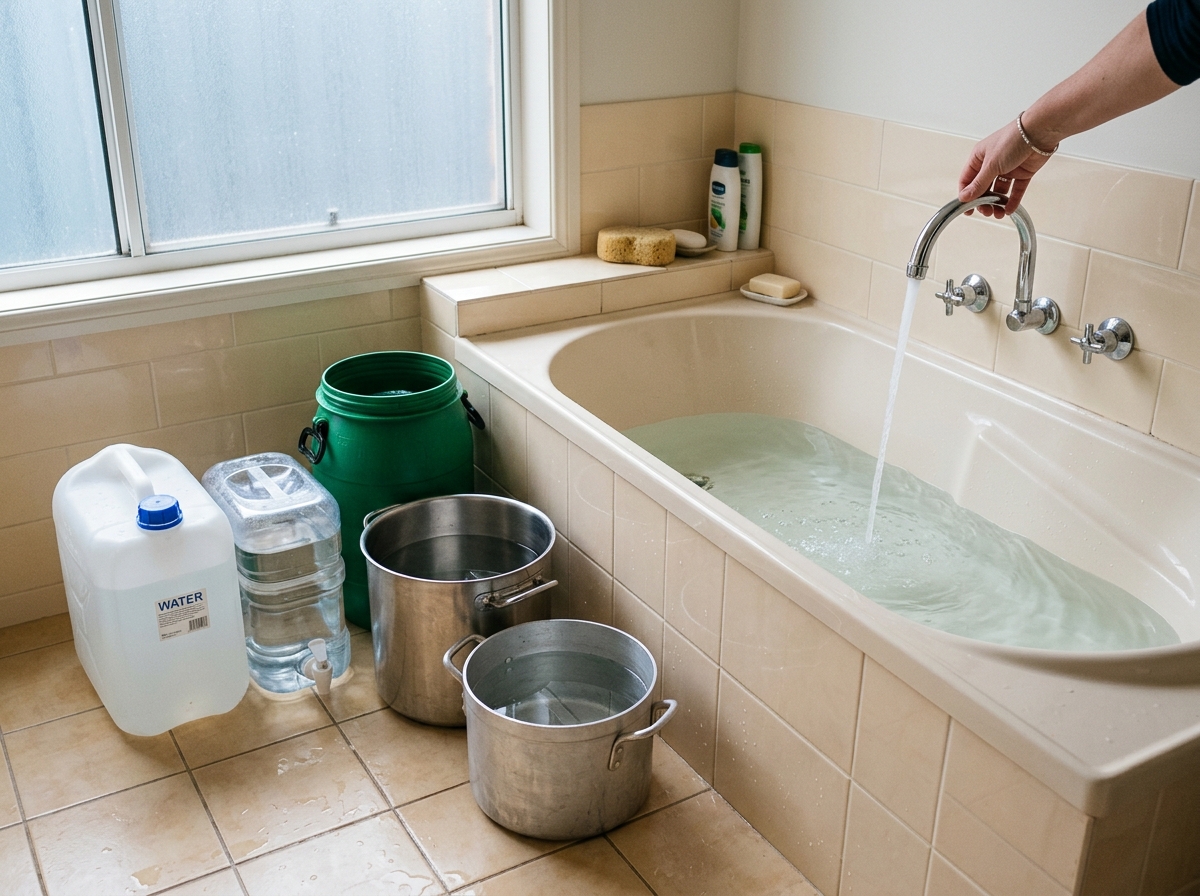
The bath, every pot, every bottle, the washing machine drum. There is a window at the start of most emergencies — sometimes minutes — where water is still flowing and nobody thinks to use it.

Pick the smallest room with the fewest exterior walls, block the drafts, hang blankets over the windows, and move everyone into it. A single sealed room can be held for weeks.
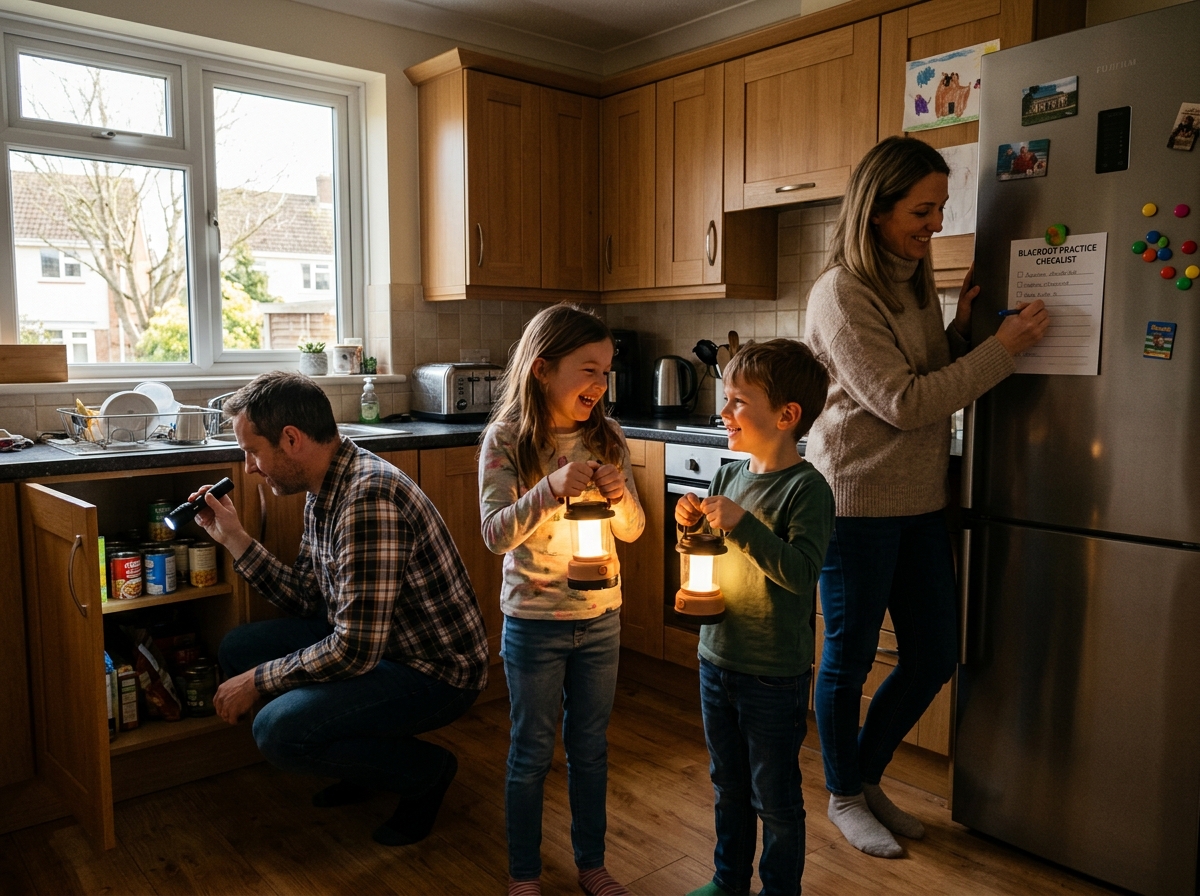
Switch the power off on a Saturday morning and live an entire day on your own system. You will find the failures while they are still an inconvenience instead of an emergency.
— Inside the guide —
41 chapters across 10 parts, plus 6 printable appendices.
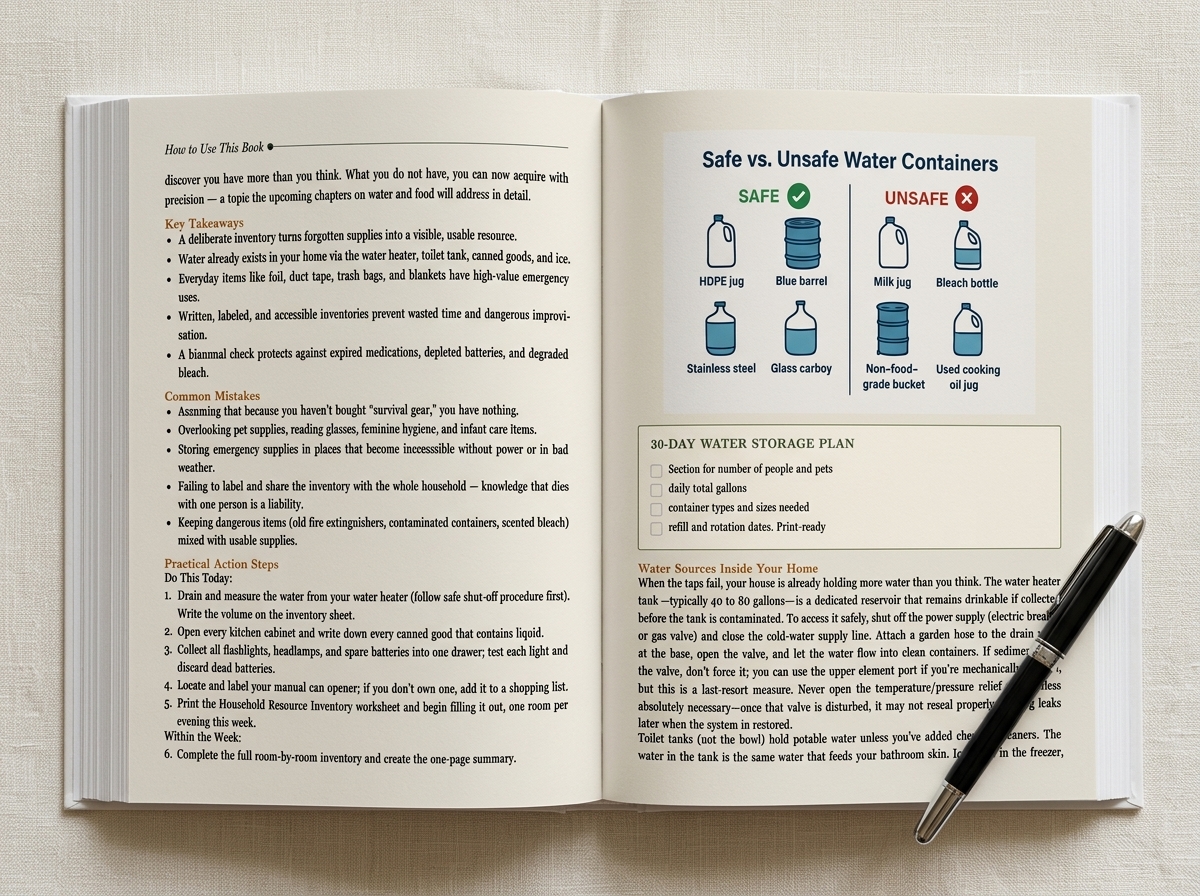
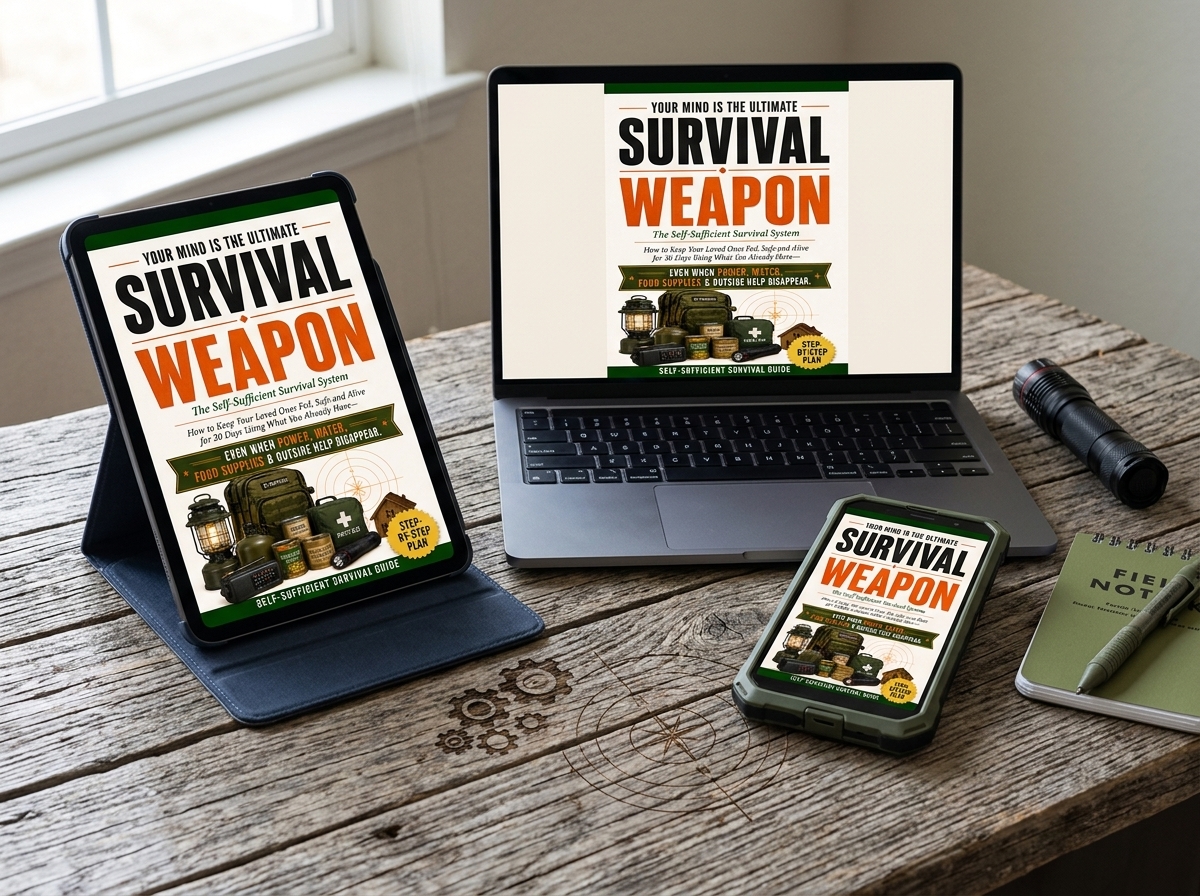
— Included free with the complete guide —
— Reader case study —
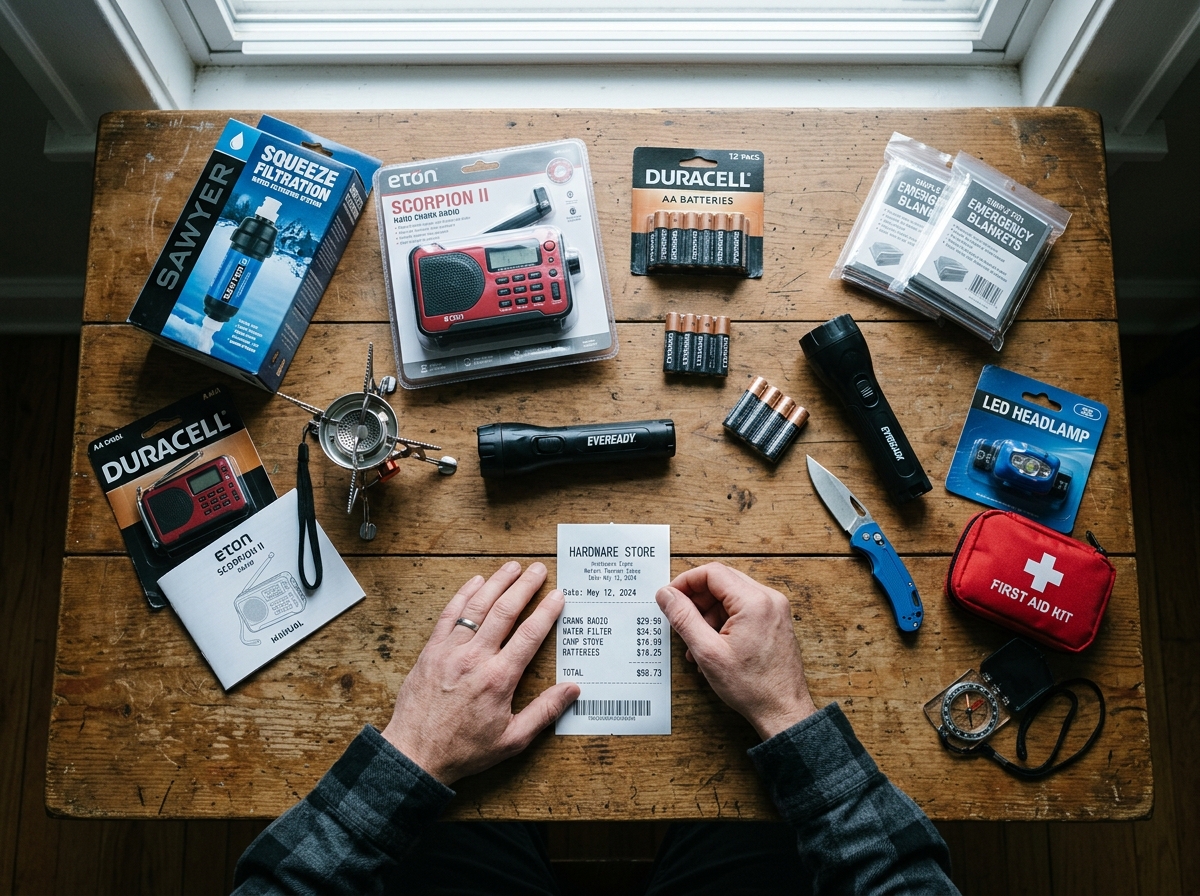
“I had spent $400 and still could not cook dinner.”
A hand-crank radio, a boxed water filter, a stove with no matching fuel and a pile of batteries. It looked like preparation. It was not a working system. The resource-first chapters showed me how to start with the house, test what I owned, and buy only the missing links. I returned half the gear and ended up with a plan that actually worked.
Get the same guide Tom used — $9.99 →Digital Edition
Complete eBook + all 6 printable appendices
SAVE $49.01 TODAY — LIMITED TIME
◷ 00:27:42 · Price returns to $59 when the timer hits zero
🔒 Secure checkout · Visa · Mastercard · PayPal · 7-day guarantee
This offer ends in
When the timer hits zero, the price returns to $59.
— Reader case study —
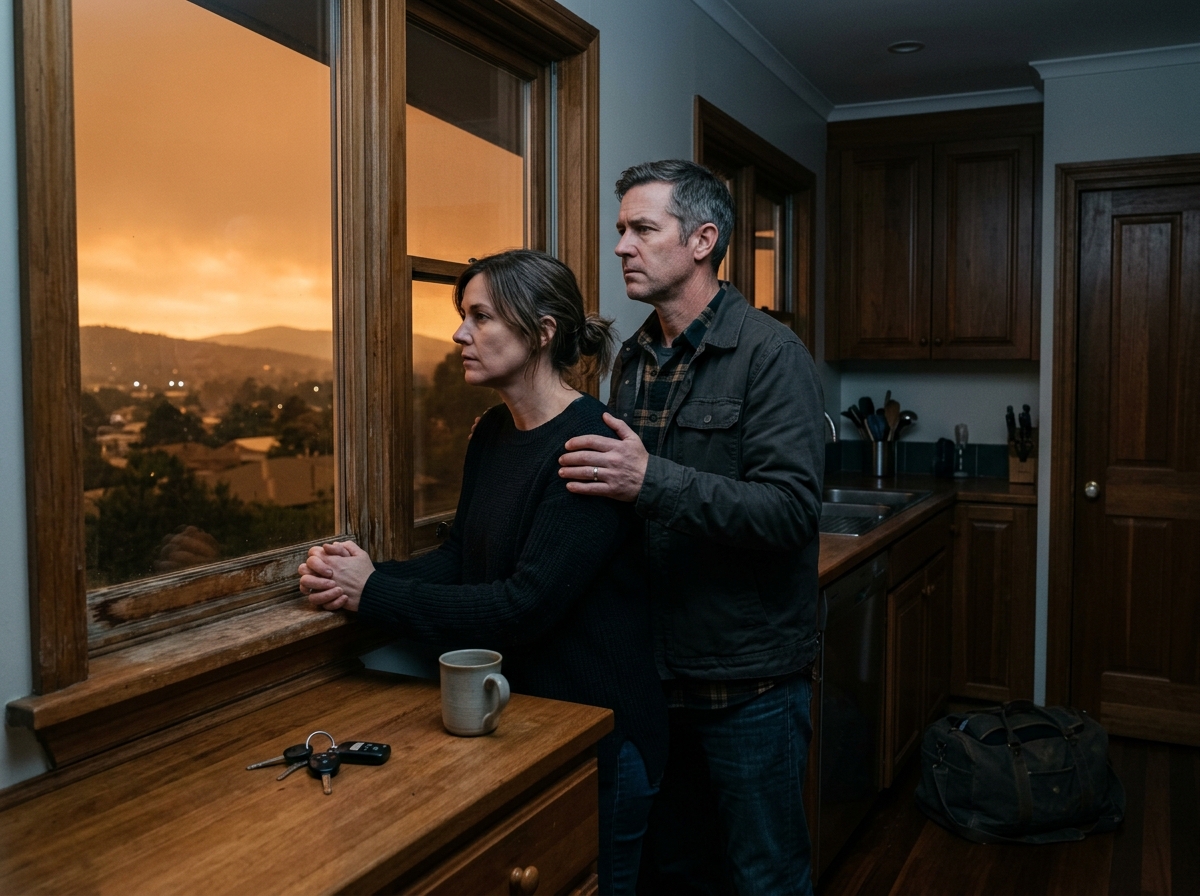
“We stopped arguing because we had a decision matrix.”
When the air outside turned orange, every conversation became stay or go, now or later, take the children or wait. The decision sheet in Chapter 29 gave us triggers, routes, contacts, medicines, documents and a time to stop debating. We did not need to use it that night, but the family finally knew what the plan was.
Get the same guide Rachel used — $9.99 →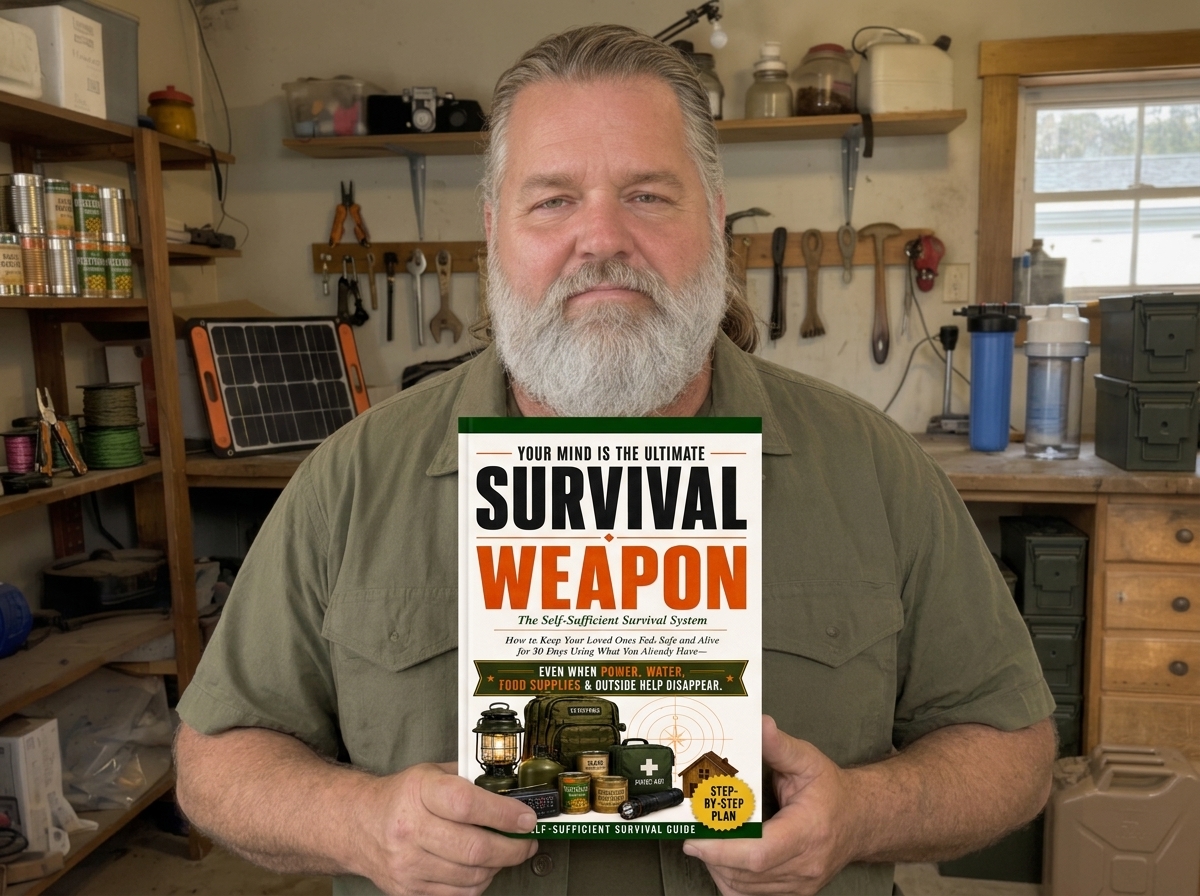
— Everything you get today —
— Reader case study —
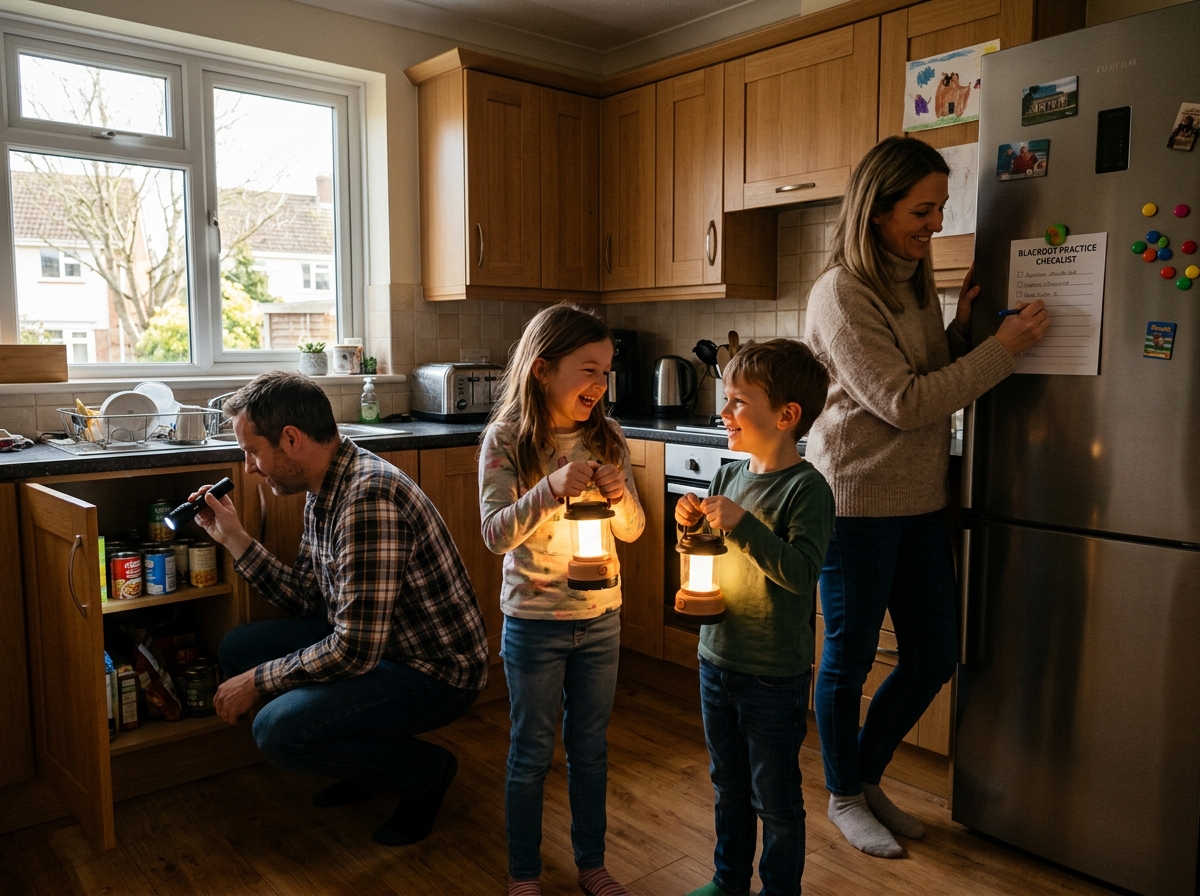
“We ran the drill for fun. We found eleven things wrong in one day.”
My wife thought it was ridiculous. We turned the power off at eight on a Saturday morning and lived off our own system for twenty-four hours, exactly as Chapter 41 describes. Dead torch batteries. A camping stove with a fitting that did not match the canisters we had. No manual tin opener anywhere in the house. Nobody knew where the water shut-off was. Eleven separate failures, all of them trivial to fix on a Saturday and all of them serious at two in the morning in February. We do it twice a year now and the children ask when the next one is.
Get the same guide Ian used — $9.99 →— No-risk reading —
Read it, run the home inventory, test the water plan and use the stay-or-go sheet with your own family. If the guide does not give you at least one practical improvement you can make immediately — or if it is not what was promised — email us within 7 days for a full refund. No forms, no runaround.
— Questions, answered —
No, and it is deliberately written against that culture. There is no bunker, no stockpiling, no collapse fantasy and no camouflage. The book is about being the calm, organised person in the house — not about becoming a survivalist.
The opposite. The book starts with an inventory of what is already in your home, and most families find they already hold four to seven days of supplies. Where purchases are genuinely needed, the guide gives the correct order and a $10-a-week plan that builds a 30-day reserve slowly and without debt.
Yes — arguably more so. Flats have less storage, no garden, no wood stove and more dependence on shared infrastructure. The book handles small-space water storage, heating a single room, sanitation without plumbing, cooking safely indoors and the ventilation risks that matter most in a flat.
The realistic ones — power outages, water interruptions, severe weather, earthquakes, fires, supply shortages and the ordinary cascade that follows when electricity goes. It is built around a 30-day objective because that covers the overwhelming majority of real events.
That is one of the reasons the book exists. The family-care chapters cover medication schedules, mobility, special diets, sensory and cognitive needs, comfort objects and routines for children, preventing separation, maintaining body temperature and writing an individual care plan for each person. Pets get their own chapter as well.
An instant PDF download of the complete guide — 41 chapters across 10 parts, roughly 125 pages — plus all six printable appendices: the 30-Day Family Supply Calculator, the Five-Minute Home Emergency Checklist, the Stay-or-Go Decision Sheet, the Family Contact and Meeting Plan, the Emergency Pantry Shopping List and the Household Medical Information Sheet.
— This weekend, become the calm person in the room —
Download the guide tonight. Start with the inventory tomorrow. The goal is not to imagine the end of the world; it is to know what to do when ordinary infrastructure stops working for a day, a week or a month.
Get the eBook — $9.99One-time secure payment · instant PDF to your email · yours forever
🔥 Price returns to $59 when the timer hits zero